How to Lose Weight Fast — What Actually Works
Losing weight quickly is a goal many people chase, but most conventional approaches fail because they focus on temporary, unsustainable solutions. Extreme calorie restriction and endless hours of cardiovascular exercise often lead to muscle loss, a sluggish metabolism, and frustrating rebound weight gain. The key to fast, permanent fat loss lies in understanding your body's biological systems and using strategies backed by advanced sports science and exercise physiology.
To achieve lasting results, you must shift your focus from simply losing weight on the scale to actively losing body fat while preserving—and even building—lean muscle tissue. In this comprehensive guide, you'll discover the actual science of rapid fat loss and a step-by-step roadmap to transform your body safely and sustainably.

Why Weight Training Beats Cardio for Fat Loss
A common misconception is that steady-state cardiovascular activity (like jogging, running, or walking on a treadmill) is the best form of exercise for fat loss. While cardio does burn calories during the activity itself, this metabolic spike ends the moment you step off the machine. Cardio does not build muscle; in fact, excessive cardio in a calorie deficit can trigger muscle wasting, which ultimately slows down your resting metabolism.
In contrast, intense strength and weight training along with proper nutrition and adequate recovery increases the amount of lean tissue in your body. This process, scientifically known as hypertrophy, has a profound and permanent impact on your Basal Metabolic Rate (BMR)—the rate at which your body burns calories to sustain life while at relative rest.
Muscle is a highly active metabolic tissue. Carrying more muscle means your body requires more energy just to exist, turning you into a 24/7 fat-burning furnace. Furthermore, weight training triggers a powerful immediate metabolic disturbance called the Afterburn Effect, making it the absolute king of fat loss tools.
The Core Mechanisms: Hypertrophy and Afterburn
To understand why resistance training is so effective, we must explore the two biological pathways through which it drives fat loss: Hypertrophy (the long-term pathway) and the Afterburn Effect (the immediate short-term pathway).
1. Muscle Hypertrophy and Your Resting Metabolism
To appreciate the relationship between muscle hypertrophy and fat loss, we must look at what body fat actually is.
> [!NOTE]
> Adipose tissue (body fat) is simply your body's stored, unused energy.
If you eat more energy than your body requires, the excess is stored as fat. This brings to light a powerful concept: fat loss isn't just about how little food you eat, but about how much energy your body naturally expends to keep you alive. This is determined by your Basal Metabolic Rate (BMR).
By revving up a sluggish BMR, you can enjoy a leaner body without relying on starvation diets. While internal organs (like the liver, heart, and brain) contribute significantly to your resting metabolic rate, you have very little direct control over their energy expenditure. However, you have complete control over the musculoskeletal system—the complex network of voluntary muscles responsible for every movement you make.
Muscle tissue is incredibly expensive for your body to maintain. Continuous protein synthesis, cellular repair, and resting muscle tone require a constant stream of energy. There is a distinct, inverse relationship between muscle mass and body fat: more lean muscle automatically translates to less fat, and vice versa.
This inverse relationship is illustrated by two biological facts:
- Fact #1: An average man naturally carries less body fat than an average woman. This is primarily due to the predominance of testosterone in men, which is the key hormone responsible for muscle growth and retention, giving them a metabolic advantage.
- Fact #2: An average 20-year-old carries less fat than an average 40-year-old. As we age, we naturally lose muscle mass—a process called sarcopenia. Unless you engage in active strength training and eat sufficient protein, this loss of muscle slows down your BMR, making age-related weight gain inevitable.
The ultimate conclusion is clear: if you want to rid yourself of excess fat permanently, you must increase your lean muscle tissue through hypertrophy.
2. The Afterburn Effect (EPOC)
While hypertrophy is your long-term metabolic solution, weight training also delivers an immediate, short-term fat loss boost through a phenomenon known as the Afterburn Effect, or scientifically, Excess Post-Exercise Oxygen Consumption (EPOC).
During an intense strength training session, your body’s immediate energy reserves are depleted, and muscle fibers experience microscopic wear and tear (micro-trauma). Once your workout ends, your body does not immediately return to its resting state. Instead, it enters a prolonged recovery phase that requires a massive amount of oxygen and energy.
Because steady-state cardio (like jogging) causes virtually no muscular micro-trauma, it offers little to no afterburn. Weight training, however, forces your body to keep burning calories at an accelerated rate for up to 24 to 48 hours post-workout to fuel the repair process.
Conventional science supports the EPOC theory through several physiological mechanisms:
- Replenishment of Energy Resources: Your body expends energy to replenish ATP (Adenosine Triphosphate) and Creatine Phosphate, which are the immediate fuel sources used during heavy lifts. It also converts lactate (produced during intense sets) back into glucose and restores muscle glycogen stores.
- Re-oxygenation of Blood and Tissues: Elevated oxygen intake is required to re-oxygenate blood and muscle myoglobin depleted during exercise.
- Core Temperature Regulation: Shifting heavy loads generates massive heat. Your body must work hard and expend energy to cool your core temperature back down to normal.
- Hormonal and Cardiac Recovery: Energy is spent to return your heart rate, ventilation rate, and elevated circulatory hormones (like adrenaline and cortisol) back to baseline resting levels.
The magnitude of EPOC is directly determined by workout intensity. The higher the intensity and the more muscle fibers you disrupt, the greater the recovery demands and the larger the post-workout calorie burn.
How to Optimize Your Training for Maximum Fat Loss
To get the absolute best fat-burning and afterburn benefits from your weight training, you must structure your workouts around two main variables:
- Intensity: A set performed with a heavy load (e.g., a challenging 6-12 rep maximum) causes significantly more mechanical tension and muscle fiber disruption than a light-weight set of 20 reps. This results in a much higher EPOC response.
- Surface Area of Damage: Training large, multi-joint muscle groups (like the legs, back, and chest) recruits a vast amount of muscle mass. Compound, unsupported movements (like squats and rows) engage multiple muscle groups and core stabilizers at once, demanding far more recovery energy than small isolation movements (like bicep curls or calf raises).
Core Training Guidelines:
- Never skip your big muscle groups: Prioritize legs, back, and chest workouts.
- Focus on Compound Lifts: Use multi-joint, free-weight, or bodyweight exercises over machines and isolation movements.
- Lift with Challenging Resistance: Choose weights that challenge you within the 6-12 rep range with perfect form.
The 5 Pillars of Effective Weight Loss
1. Prioritize Progressive Weight Training
To build and preserve muscle, you must progressively challenge your muscles over time by increasing weight, reps, or sets.

Here is a selection of highly effective compound exercises:
- Squats (Targets: Quadriceps, Glutes, Hamstrings, Core) — Stand with feet shoulder-width apart. Lower your body by bending at your knees and pushing your hips back. Keep your chest high and knees tracking in line with your toes. Drive through your heels to return to the starting position. Volume: 4 sets of 10-12 reps.
- Push-Ups (Targets: Chest, Shoulders, Triceps, Core) — Start in a strong plank position. Lower your chest until it nearly touches the floor, keeping your elbows at a 45-degree angle to your body. Press back up forcefully. Volume: 3 sets of 8-12 reps.
- Lunges (Targets: Quadriceps, Glutes, Hamstrings) — Step forward with one leg, lowering your hips until both knees are bent at 90-degree angles. Push off your front foot to return to the start. Volume: 3 sets of 10 reps per leg.
- Bent-Over Rows (Targets: Upper Back, Lats, Biceps) — Hinged at your hips with a flat back, pull dumbbells or resistance bands toward your lower chest, squeezing your shoulder blades together. Lower with control. Volume: 4 sets of 10-12 reps.
- Plank (Targets: Core, Shoulders, Glutes) — Hold a strong line from your head to your heels resting on your forearms, keeping your abdominal muscles tightly engaged. Volume: 3 sets of 30-45 seconds.
2. Fuel with Protein-Rich Whole Foods
Protein is the building block of muscle tissue and is highly satiating, helping you stay full and avoid cravings.
> [!IMPORTANT]
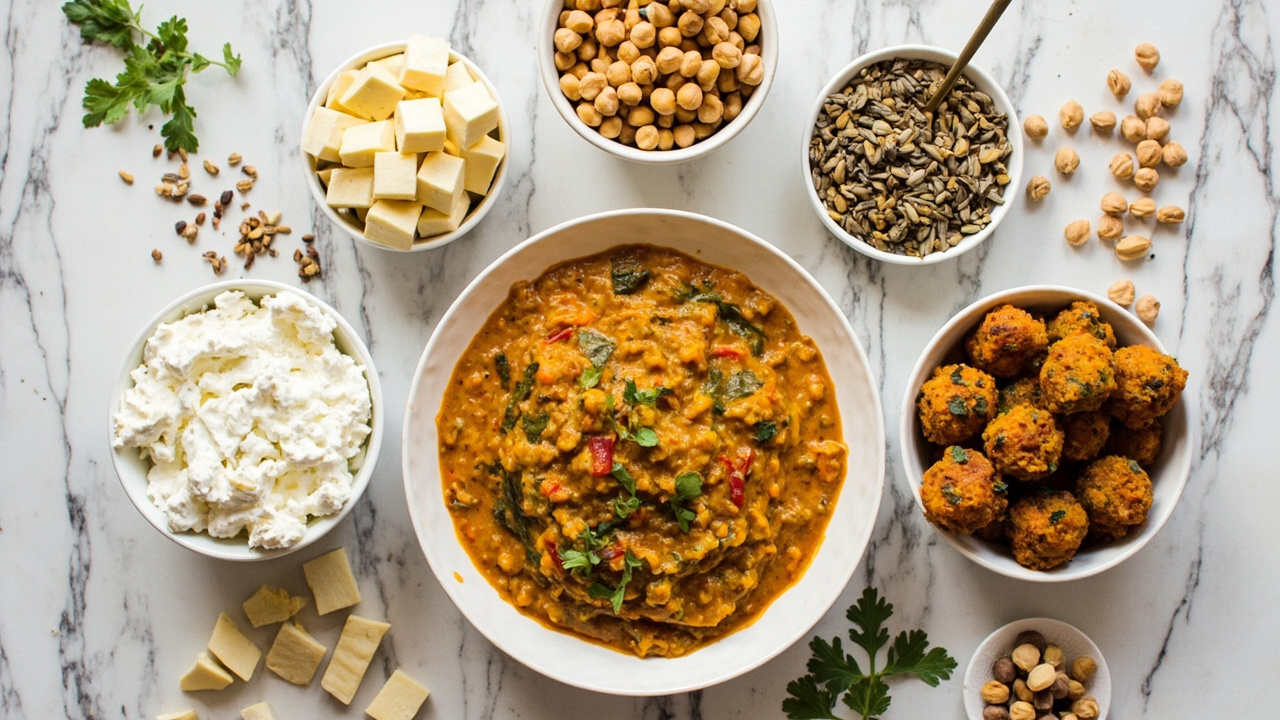
> To maximize muscle recovery and support your metabolism, aim to distribute your protein intake evenly across 4-5 small meals throughout the day. Excellent local, protein-rich options include paneer, dal, dahi (yogurt), chickpeas (chana), kidney beans (rajma), milk, seeds, nuts, and peanut butter.
Consuming protein within 30 to 60 minutes after your workout is highly beneficial, as it supplies your muscles with the amino acids needed to jumpstart the repair process. For instance, a post-workout meal of dal with roti, or paneer with dahi, is an excellent way to recover.
In addition to protein, stay hydrated by drinking 3 to 4 liters of water daily. The body often confuses mild dehydration with hunger, leading to unnecessary snacking. Start your day with a large glass of water to refresh your system and support digestion.
3. Add Strategic Cardio (HIIT)
While resistance training is the foundation, strategic cardio can accelerate fat loss. High-Intensity Interval Training (HIIT) is incredibly efficient and keeps the afterburn high.
- Sample protocol: Warm up for 5 minutes. Perform 30 seconds of high-intensity effort (like sprinting or jumping jacks) followed by 60 seconds of active recovery (like slow walking) for 8-10 rounds. Finish with a 5-minute cool-down.

4. Prioritize Sleep and Recovery
Your muscles do not grow while you are working out; they grow and repair while you rest. Quality sleep is essential for hormonal balance. Deep sleep is when your body releases Growth Hormone (which aids muscle repair and fat burning) and regulates cortisol (the stress hormone that can promote stubborn belly fat storage). Aim for 7-8 hours of deep, restful sleep every night.
5. Focus on Consistency Over Perfection
True transformation is a marathon, not a sprint. Sticking to your plan 80-90% of the time consistently is infinitely better than being perfect for a week and then giving up. Accept that progress isn't always linear, and get back on track after any minor slip-up without guilt.
Common Mistakes to Avoid
- Extreme Calorie Restriction: Starving yourself forces your body into "survival mode," where it breaks down active muscle tissue for energy and severely lowers your BMR, making rebound weight gain highly likely.
- Focusing Solely on the Scale: Your weight fluctuates daily due to water retention, sodium intake, and glycogen levels. Focus on changes in body measurements and how your clothes fit.
- Skipping Strength Training: Doing only cardio to lose weight will cause you to lose precious muscle, leaving you with a lower metabolic rate and a softer body composition.
- Avoiding Progressive Overload: If you lift the same weights and do the same exercises forever, your body has no reason to adapt, and your progress will stall.
- Overtraining: Working out excessively without allowing adequate days of rest elevates stress hormones like cortisol, which impairs recovery and promotes fat storage.
Sample Weekly Workout Routine
Here is a balanced routine designed to maximize both hypertrophy and the afterburn effect:
| Exercise | Target Area | Sets x Reps | Rest Time | Focus |
|---|---|---|---|---|
| Bodyweight or Weighted Squats | Legs, Glutes | 4 x 10-12 | 60 sec | Core tight, sit deep, push through heels |
| Standard or Incline Push-Ups | Chest, Triceps, Shoulders | 3 x 8-12 | 60 sec | Control descent, full lockout at top |
| Walking or Reverse Lunges | Quads, Hamstrings | 3 x 10 each leg | 60 sec | Keep torso upright, 90-degree bend |
| Dumbbell or Band Rows | Back, Lats, Biceps | 4 x 10-12 | 60 sec | Pull to hip, squeeze shoulder blades |
| Forearm Plank | Core, Shoulders, Glutes | 3 x 30-45 sec | 45 sec | Maintain a flat back, squeeze abs |
| HIIT Interval Sprints | Full Body | 15-20 min | - | High effort followed by active recovery |

Tailoring Workouts for Home Training
No access to a commercial gym? You can easily modify all of these exercises for home training with minimal equipment.
- Replace dumbbell rows with resistance bands or inverted rows using a sturdy table.
- Use bodyweight variations for squats and lunges, and progress to using household items (like a heavy backpack) as resistance.
- Investing in a simple set of resistance bands and a door pull-up bar is highly affordable and provides a versatile home gym setup.
- Always focus on progressive overload: if bodyweight squats become easy, increase the reps, slow down the tempo, or reduce your rest periods to keep challenging your muscles.
Smart Progress Tracking
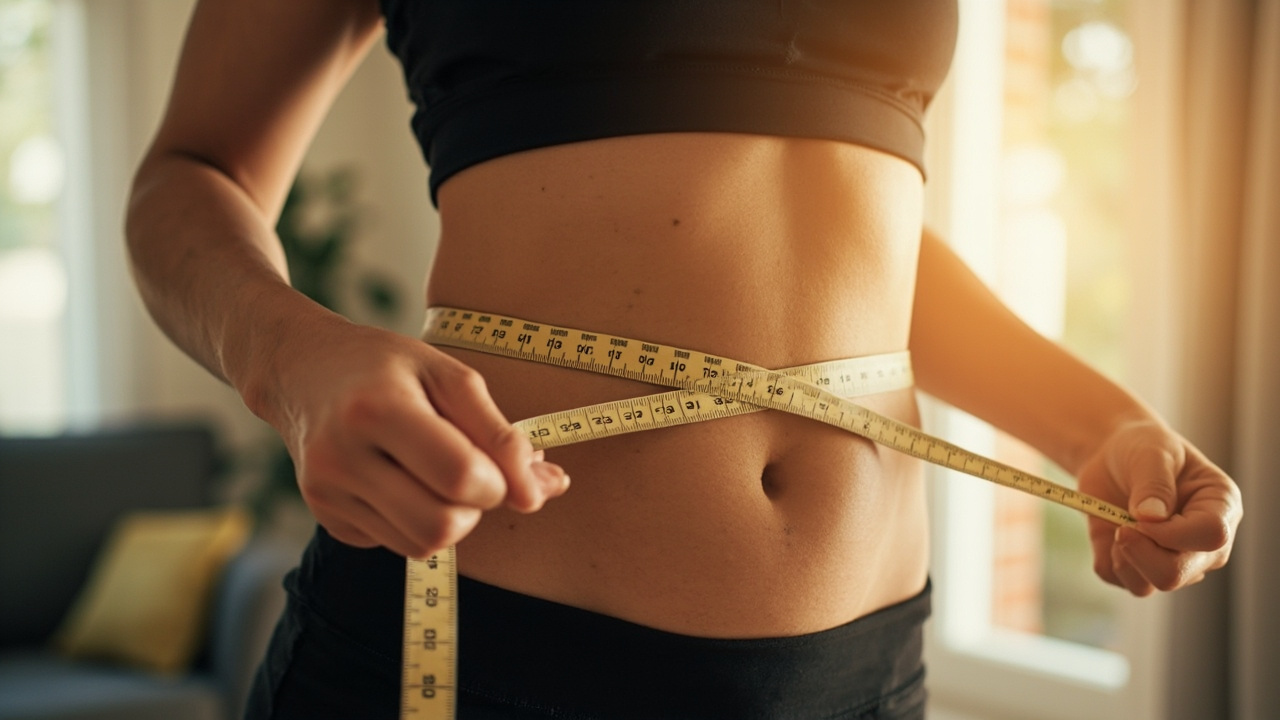
To keep yourself motivated and on track, look beyond the bathroom scale. Measure your waist and hip circumferences using a flexible tape measure—this is a far more accurate way to track fat loss. Take progress photos in the same lighting every 2-4 weeks to visually observe your changing body composition.
Weigh yourself only 2-3 times per week under the same conditions (first thing in the morning after waking up) and look at the average weekly trend rather than daily fluctuations. A healthy, sustainable rate of fat loss is roughly 0.5 to 1 kg per week.
Summary: Your Path to a Leaner, Stronger Body
Fast and sustainable weight loss isn't about exhausting yourself on a treadmill or skipping meals. It is about building a powerful metabolic engine. By prioritizing progressive resistance training, fueling your body with protein-rich whole foods, incorporating strategic HIIT, getting adequate rest, and maintaining consistency, you will build lean muscle, elevate your BMR, and melt away body fat permanently.
Ready to take your fitness journey to the next level? Message Suman Ghosh on WhatsApp to book a free consultation and get a highly personalized workout and nutrition plan tailored exactly to your lifestyle, schedule, and goals. Let's make your transformation a reality!