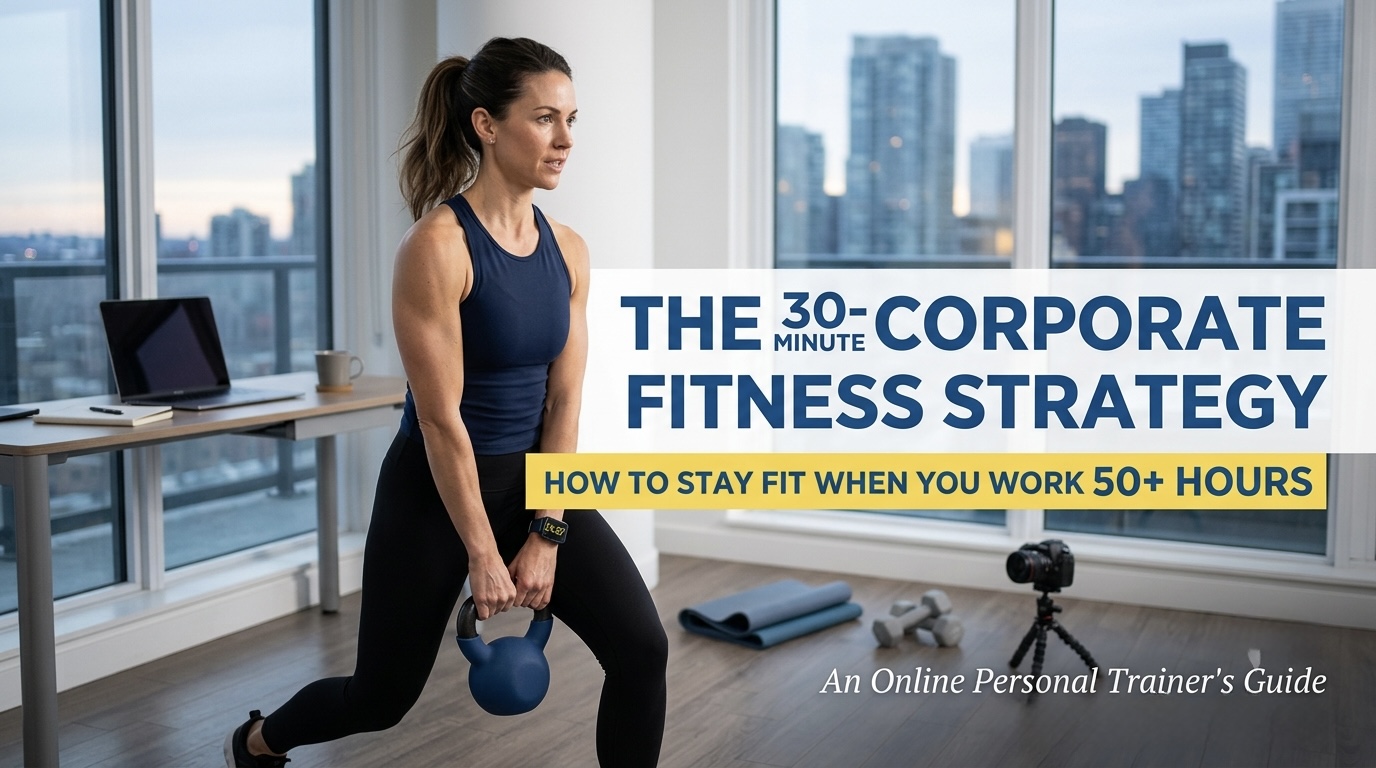

The 30-Minute Corporate Fitness Routine: Stay Fit with a Busy Work Schedule
Introduction
Between back-to-back meetings, deadlines, and the commute to work, finding time for fitness can feel impossible for corporate professionals. Yet, neglecting your health leads to decreased productivity, low energy levels, and long-term health complications. The good news? You do not need an hour at the gym to stay fit. A well-structured 30-minute workout can deliver remarkable results when designed using proven principles like the FITT protocol—Frequency, Intensity, Time, and Type. Whether you are a beginner or have been exercising for years, this guide will help you build a routine that fits seamlessly into your busy work schedule while delivering real, measurable progress.

Understanding the Science Behind Effective Short Workouts
The human body responds to exercise through specific biological mechanisms. When you work out, you create a breakdown in muscle tissue, followed by a recovery phase where your body repairs and supercompensates—building back stronger than before. This process, known as linear progression, explains why consistent, shorter workouts can be more effective than sporadic long sessions.
The macro programming approach focuses on five key fitness components: cardiorespiratory endurance, muscular endurance, musculoskeletal strength, flexibility, and ideal body composition. For corporate professionals with limited time, prioritizing these elements strategically ensures you address all aspects of health without spending hours in the gym. Each component can be targeted with just 30 minutes of focused activity, three to four times per week.
Your body composition consists of two primary elements: lean body mass (muscles, bones, organs, and body fluids) and adipose tissue (subcutaneous and visceral fat). The goal is not just weight loss but fat loss while preserving or building lean muscle mass. This is where strategic programming becomes essential—your 30-minute routine should include both resistance training and cardiovascular work to achieve optimal body composition.
The 30-Minute Workout Structure
Designing an effective 30-minute workout requires understanding the micro programming sequence. Every session should follow a logical order: general warmup, specific warmup sets, main working sets, and stretching. This sequence prepares your body for intense work, maximizes performance, and prevents injury.
Begin with a 3-minute general warmup consisting of light cardio—march in place, jumping jacks, or climbing stairs. This elevates your heart rate and increases blood flow to working muscles. Follow this with mobility drills targeting major joints: hip circles, shoulder rotations, ankle rolls, and torso twists. Spend 2 minutes on this phase to ensure joints are lubricated and muscles are ready.

The specific warmup includes one to two lighter sets of your first exercise, using approximately 50% of your working weight. This bridges the gap between general movement and heavy work. For corporate professionals using bodyweight or minimal equipment, this might mean doing five push-ups with perfect form before your main set of ten.
The Complete 30-Minute Routine
Circuit 1: Full Body Activation (10 minutes)
Exercise 1: Desk Push-Ups (3 sets of 10-12 reps)
Push-ups are one of the most effective bodyweight exercises for building upper body strength. They target your chest, shoulders, triceps, and core simultaneously. Position your hands slightly wider than shoulder-width on your desk edge. Lower your chest toward the desk, keeping your body in a straight line from head to heels. Push back up to the starting position. Rest 45 seconds between sets.
Targets: Chest, shoulders, triceps, core
Exercise 2: Squat to Chair (3 sets of 12-15 reps)
Stand in front of a stable chair with feet shoulder-width apart. Lower your hips back and down as if sitting, briefly touching the chair seat before standing back up. The key is controlling the descent and driving through your heels to stand. This exercise builds lower body strength and improves mobility in the hips and knees.
Targets: Quadriceps, gluteal group, hamstrings
Exercise 3: Standing Calf Raises (3 sets of 15-20 reps)
Stand behind your chair for balance, feet hip-width apart. Rise onto the balls of your feet, holding briefly at the top, then lower heels back to the floor. Calf raises improve ankle stability and support overall leg function—a critical factor for professionals who spend long hours standing or walking.
Targets: Calves, ankle stabilizers
Circuit 2: Cardio Burst (8 minutes)
Exercise 4: High Knees (3 sets of 30 seconds)
March in place, bringing your knees up to hip height with each step. Pump your arms in rhythm with your legs. This exercise elevates your heart rate rapidly while engaging your core. For maximum effect, focus on maintaining good posture—chest up, shoulders back.
Intensity: Moderate to High

Exercise 5: Mountain Climbers (3 sets of 20 reps total)
Start in a push-up position with hands flat on the floor. Alternate bringing one knee toward your chest, then switching rapidly. Mountain climbers provide an excellent combination of cardio and core work. Perform 10 reps with each leg, rest 30 seconds between sets.
Targets: Core, shoulders, hip flexors, cardiovascular system
Exercise 6: Quick Feet (3 sets of 30 seconds)
Stand with feet hip-width apart, then rapidly shift your weight side to side, staying on the balls of your feet. This drill improves agility, coordination, and heart rate response. It is perfect for the office as it requires minimal space and can be done quietly.
Intensity: Moderate
Circuit 3: Flexibility and Recovery (7 minutes)
Exercise 7: Standing Hamstring Stretch (2 sets of 30 seconds per leg)
Stand tall, extend one leg forward with heel on the floor and toes pointing up. Hinge forward at the hips, keeping your back straight, until you feel a gentle stretch in the back of your thigh. Hold for 30 seconds, then switch legs. This counteracts the effects of prolonged sitting, which shortens the hamstrings over time.
Targets: Hamstrings, lower back
Exercise 8: Chest Opener (2 sets of 30 seconds)
Stand in a doorway with arms at 90-degree angles, forearms resting on the door frame. Step one foot forward and lean through the doorway until you feel a stretch across your chest and front shoulders. This stretch counteracts the rounded shoulder posture common among desk workers.
Targets: Chest, front deltoids, intercostal muscles
Exercise 9: Cat-Cow Stretch (5-8 repetitions)
Position yourself on hands and knees with wrists under shoulders and knees under hips. Inhale, arch your back, and look up (Cow). Exhale, round your spine, and tuck your chin (Cat). Flow between these positions with your breath. This exercise mobilizes the entire spine and relieves tension accumulated from desk work.
Targets: Spine mobility, core activation, stress relief
Weekly Scheduling for Busy Professionals
Consistency matters more than intensity when starting a new fitness routine. For beginners, three workout sessions per week with at least one rest day between sessions allows proper recovery. As your fitness improves, you can progress to four sessions weekly.
A sample weekly schedule for corporate professionals: Monday for 30-minute full body routine, Tuesday for active recovery with 20-minute walk, Wednesday for 30-minute cardio-focused circuit, Thursday for rest day, Friday for 30-minute full body routine, Saturday for 30-minute flexibility and mobility session, and Sunday for rest or light activity.

The key principle is progressive overload—gradually increasing either the weight, repetitions, sets, or intensity as your body adapts. Without progression, your fitness plateaus and improvements stop. Track your workouts in a simple notebook or app to monitor your progress over weeks and months.
Nutrition for the Corporate Professional
Supporting your 30-minute workouts requires proper nutrition, especially when time is limited. Focus on protein-rich foods that aid muscle recovery and satiety. Include dal, paneer, chickpeas, Greek yogurt, nuts, and seeds in your meals. For breakfast, consider idli with sambar or oats with yogurt and nuts—these provide sustained energy without heavy preparation time.
Post-workout nutrition should include a combination of protein and complex carbohydrates within two hours of exercise. A simple option is a bowl of yogurt with banana and peanut butter, or roasted chana with a piece of fruit. Staying hydrated throughout the day is equally important—aim for at least 8-10 glasses of water daily, increasing this amount if you sweat during workouts.

Meal prepping on weekends can save valuable time during weekdays. Prepare simple dal, sabzi, and roti in advance. Having healthy options readily available prevents relying on processed foods or skipping meals when work gets busy.
Common Mistakes to Avoid
Many professionals start enthusiastically but abandon their fitness routines within weeks. Common pitfalls include attempting too much too soon, skipping the warmup phase, and comparing progress with younger colleagues or gym-goers. Remember that any exercise is better than none—a 15-minute workout still provides benefits when a 30-minute session is not possible.
Another mistake is neglecting rest and recovery. Your body grows stronger during recovery phases, not during workouts. Ensure you are sleeping 7-8 hours nightly and giving yourself at least one full rest day per week. Ignoring recovery leads to overtraining, which manifests as fatigue, decreased performance, and increased susceptibility to illness.
Poor form compromises results and increases injury risk. When time-pressured, resist the urge to rush through exercises. Performing 8 quality push-ups with perfect form delivers better results than 15 push-ups with sloppy technique. If you are uncertain about exercise form, start with easier variations and master those before progressing.
Tracking Your Progress
Measuring progress goes beyond the bathroom scale. Track measurements like waist circumference, chest size, and arm girth every four weeks. Note how your energy levels change, how you feel during meetings, and whether you experience less back pain or improved posture. These qualitative improvements often appear before visible physical changes.
Take progress photos every 4-6 weeks under consistent conditions—same time of day, same lighting, same pose. The mirror becomes unreliable as your body composition changes because adaptation happens gradually. Photographs reveal transformation that the eye misses day-to-day.
Keep a simple workout log recording exercises, sets, reps, and any notes about how you felt. This documentation helps identify patterns—what works for your schedule, which exercises you enjoy most, and where you need more challenge. Review this log monthly to celebrate progress and adjust your approach.
Conclusion
Finding time for fitness as a corporate professional is not about finding空闲时间—it is about making time. The 30-minute routine outlined above fits into lunch breaks, early mornings, or right after work. The science-backed FITT principles ensure every minute is used effectively. Remember that consistency beats intensity, proper form beats rushing, and recovery enables growth.
Start with three sessions this week, even if they are shorter than planned. Build the habit first; optimize later. Your health is the foundation upon which all your professional success is built. Give it the attention it deserves.
Ready to transform your fitness? Contact Suman Ghosh for personalized guidance on creating a workout routine tailored to your schedule, goals, and fitness level.